Category: Anime & Manga Updates

  • Best Friendship Dynamics in Manga

    Best Friendship Dynamics in Manga

    Introduction

    Manga is known for its thrilling plots and unforgettable characters, but what often leaves a lasting impression are the relationships—especially friendships. Whether forged in battle, nurtured through hardship, or built on years of trust, powerful manga friendships add emotional depth and authenticity to the story. In this article, we explore some of the most memorable and influential friendship dynamics in manga that uplift, inspire, and resonate with readers worldwide.

    Best Friendship Dynamics

    Naruto & Sasuke – Naruto

    Their rivalry-turned-brotherhood is one of the most emotionally charged friendships in shonen history. Through betrayal, redemption, and countless battles, Naruto’s unwavering belief in Sasuke becomes a powerful symbol of forgiveness and hope.

    Luffy & The Straw Hat Crew – One Piece

    Monkey D. Luffy’s relationship with his diverse and loyal crewmates exemplifies the “found family” trope. Their shared dreams and mutual respect create a tight-knit group that’s willing to risk everything for one another.

    Gon & Killua – Hunter x Hunter

    The bond between these two young boys is both pure and complex. Killua’s dark background contrasts Gon’s innocence, and their friendship helps both grow emotionally, ethically, and mentally throughout their journey.

    Edward & Alphonse Elric – Fullmetal Alchemist

    As brothers and best friends, Ed and Al’s relationship is the emotional core of the series. Their sacrifices and unbreakable trust showcase how sibling bonds can elevate the meaning of friendship in manga.

    Mob & Reigen – Mob Psycho 100

    At first glance, Reigen seems like a conman exploiting Mob, but their evolving friendship reveals deep respect and support. Reigen’s belief in Mob’s humanity and Mob’s loyalty to Reigen is both hilarious and touching.

    Yusuke & Kuwabara – Yu Yu Hakusho

    From street fights to spirit battles, Yusuke and Kuwabara’s dynamic is built on rivalry and mutual respect. Their banter and brotherly support embody classic 90s manga friendships.

    Emma, Ray & Norman – The Promised Neverland

    This trio of gifted orphans demonstrate incredible teamwork and emotional intelligence. Their friendship is based on survival, trust, and a shared goal of saving others, making it both intense and inspiring.

    Hinata & Kageyama – Haikyuu!!

    Starting off as competitive rivals, Hinata and Kageyama develop into one of the strongest partnerships in sports manga. Their teamwork and mutual growth redefine what friendship means on and off the court.

    Senku & Chrome – Dr. Stone

    Their friendship blends science and curiosity. Chrome’s admiration for Senku and their mutual desire to rebuild civilization forms a strong intellectual and emotional bond.

    Light & L – Death Note (Complex & Twisted)

    Though more of a rivalry than friendship, the subtle respect and psychological connection between Light and L adds layers of complexity. Their “friendship” is a brilliant study in manipulation and mutual fascination.

    Final Thoughts

    Great manga friendships aren’t just about cheerful moments—they’re about emotional support, shared goals, and transformative growth. From brotherhood and rivalry to mentorship and teamwork, these unforgettable bonds bring depth and meaning to their stories. Whether you’re drawn to heartwarming dynamics or intense rivalries, the friendships in manga remain some of the most impactful elements in the medium.

    Related Articles

  • Manga Characters Who Changed the Genre

    Manga Characters Who Changed the Genre

    Iconic Manga Characters

    Over the decades, certain manga characters have done more than entertain—they’ve reshaped entire genres. Whether through groundbreaking personality traits, subversive roles, or massive cultural impact, these iconic manga characters became milestones in the evolution of manga storytelling. This article explores the figures who didn’t just exist in their worlds—they changed the landscape of manga forever.

    Best Iconic Manga Characters

    Goku – Dragon Ball

    Why He’s Iconic:
    Goku is arguably the blueprint for the shonen protagonist. His relentless spirit, cheerful attitude, and unyielding drive to improve set the standard for generations of manga heroes. His influence spans not just manga, but global pop culture.

    Genre Impact: Revolutionized the action and adventure shonen formula.

    Naruto Uzumaki – Naruto

    Why He’s Iconic:
    Naruto’s journey from outcast to hero inspired millions. He introduced emotional depth to the shonen hero archetype, tackling themes of loneliness, identity, and perseverance.

    Genre Impact: Brought deeper character arcs and emotional complexity to shonen manga.

    L – Death Note

    Why He’s Iconic:
    With his eccentric mannerisms and brilliant deductive skills, L redefined what a rival character could be. His cat-and-mouse battle with Light Yagami captivated readers and influenced countless mystery-thriller series.

    Genre Impact: Elevated psychological tension and cerebral rivalries in manga.

    Light Yagami – Death Note

    Why He’s Iconic:
    Light challenged moral boundaries as a main character. A high school genius turned self-righteous killer, he blurred the line between hero and villain.

    Genre Impact: Redefined the concept of the antihero in mainstream manga.

    Astro Boy – Astro Boy

    Why He’s Iconic:
    Created by Osamu Tezuka, Astro Boy is one of the earliest and most influential manga characters. As a robot with a human heart, he pioneered emotional storytelling in sci-fi manga.

    Genre Impact: Laid the foundation for modern manga and anime storytelling.

    Levi Ackerman – Attack on Titan

    Why He’s Iconic:
    Levi’s cold demeanor, tactical brilliance, and unmatched combat skills made him a fan favorite. More than just cool, his backstory added emotional depth to a dark and brutal series.

    Genre Impact: Set a new standard for side characters becoming breakout icons.

    Motoko Kusanagi – Ghost in the Shell

    Why She’s Iconic:
    Major Kusanagi is a cybernetic government agent who questions the nature of identity and consciousness. As a powerful female lead, she challenged gender roles and philosophical limits in sci-fi.

    Genre Impact: Elevated cyberpunk manga and pushed gender and existential boundaries.

    Thorfinn – Vinland Saga

    Why He’s Iconic:
    Starting as a revenge-driven warrior, Thorfinn’s transformation into a pacifist explorer breaks the typical arc of violent heroes. His journey reflects themes of redemption, trauma, and peace.

    Genre Impact: Redefined the protagonist arc in historical and seinen manga.

    Luffy – One Piece

    Why He’s Iconic:
    Monkey D. Luffy combines humor, heart, and heroism in a way that reshaped adventure manga. His loyalty and dream-driven personality have inspired generations of readers.

    Genre Impact: Reinvented the pirate genre and solidified the “found family” trope in manga.

    Sailor Moon – Sailor Moon

    Why She’s Iconic:
    Usagi Tsukino (Sailor Moon) brought magical girl manga to global heights. With her vulnerability and strength, she balanced femininity and power, making the magical girl genre mainstream.

    Genre Impact: Defined the magical girl genre and inspired countless anime and manga heroines.

    Final Thoughts

    These iconic manga characters weren’t just memorable—they were transformative. Through unique personalities, bold themes, and cultural impact, they reshaped manga genres and storytelling norms. Their legacies continue to influence new generations of manga artists and fans alike.

    Related Articles

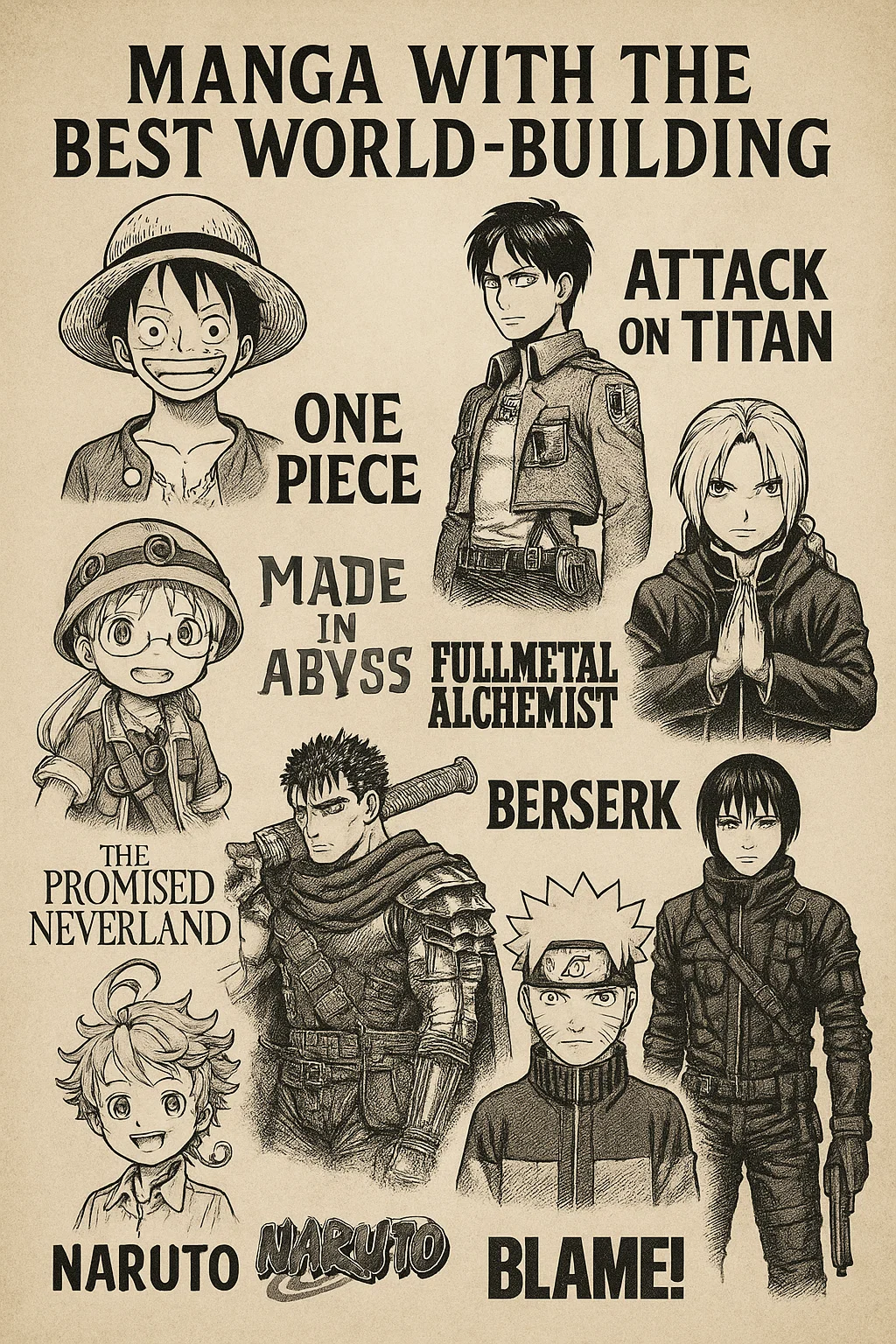
  • Manga with the Best World-Building

    Manga with the Best World-Building

    Best World-Building Manga

    One of the most captivating aspects of reading manga is getting lost in a richly crafted world. Whether it’s a dystopian future, a sprawling fantasy land, or a reimagined version of our own world, great manga world-building pulls readers deep into the story and keeps them invested. In this article, we explore manga series known for their exceptional world-building, where settings are more than just backdrops—they’re living, breathing parts of the narrative.

    One Piece

    Author: Eiichiro Oda
    Why It Stands Out:
    With its vast oceans, diverse islands, and complex political systems, One Piece is a masterclass in manga world-building. Oda creates a universe full of distinct cultures, races, and histories, making every arc feel like a new adventure within the same grand world.

    Attack on Titan

    Author: Hajime Isayama
    Why It Stands Out:
    What begins as a story about humanity’s survival behind walls evolves into a deep exploration of global conflict, ideologies, and hidden histories. The way Isayama gradually reveals the truth behind the Titans is a brilliant example of layered world-building.

    Made in Abyss

    Author: Akihito Tsukushi
    Why It Stands Out:
    The Abyss is one of the most haunting and imaginative settings in manga. Each layer of this massive pit introduces new rules, ecosystems, and dangers, immersing readers in a mysterious and eerie world.

    Fullmetal Alchemist

    Author: Hiromu Arakawa
    Why It Stands Out:
    Arakawa builds a detailed world where alchemy is science, nations are defined by their philosophies, and historical events shape the present. The lore, geography, and political systems are tightly interwoven with the story.

    The Promised Neverland

    Author: Kaiu Shirai (story), Posuka Demizu (art)
    Why It Stands Out:
    From the deceptive calm of Grace Field House to the vast and terrifying demon world, The Promised Neverland constantly expands its universe. Each location has distinct rules, societies, and stakes that enrich the plot.

    Berserk

    Author: Kentaro Miura
    Why It Stands Out:
    Miura’s Berserk features a dark, medieval world filled with supernatural horror, religious institutions, and political intrigue. The richly detailed environments and mythological depth make it a pinnacle of fantasy manga world-building.

    Naruto

    Author: Masashi Kishimoto
    Why It Stands Out:
    Kishimoto constructs a vibrant world with hidden villages, unique ninja cultures, and a deep historical timeline. The chakra system, clan histories, and political alliances create a rich, interconnected universe.

    Blame

    Author: Tsutomu Nihei
    Why It Stands Out:
    Nihei’s Blame! presents a post-apocalyptic megastructure that spans hundreds of levels, controlled by rogue AI. Its visual storytelling and architecture-driven setting create a vast, unknowable world that sparks curiosity and dread.

    Final Thoughts

    Great manga world-building transports readers into unforgettable settings where every detail enhances the story. Whether you’re drawn to epic fantasies, haunting dystopias, or intricate political landscapes, these manga series offer some of the richest worlds ever created. Dive in and let these universes captivate your imagination.

    Related Articles

  • Best Comedy Manga to Lift Your Mood

    Best Comedy Manga to Lift Your Mood

    Comedy Manga

    Sometimes, life just calls for a good laugh. Whether you’re new to manga or a longtime reader, comedy manga is a fantastic way to escape stress and enjoy light-hearted stories full of fun, wit, and ridiculous antics. In this article, we’ll highlight the best comedy manga series that will instantly boost your mood. Get ready to laugh out loud!

    Gintama

    Author: Hideaki Sorachi
    Why It’s a Must-Read:
    “Gintama” is a legendary blend of slapstick humor, meta references, and absurd scenarios set in an alternate-history Edo period with aliens. The series balances comedy with surprisingly deep moments, making it one of the most beloved comedy manga of all time.

    KonoSuba: God’s Blessing on This Wonderful World!

    Author: Natsume Akatsuki (story), Masahito Watari (art)
    Why It’s a Must-Read:
    This isekai comedy manga features a dysfunctional party of adventurers who constantly fail in hilarious ways. Kazuma, Aqua, Megumin, and Darkness are unforgettable characters that turn every mission into a comedic disaster.

    Grand Blue Dreaming

    Author: Kenji Inoue (story), Kimitake Yoshioka (art)
    Why It’s a Must-Read:
    This manga turns the college diving club into a wild, outrageous ride full of nudity gags, over-the-top expressions, and alcohol-fueled hilarity. “Grand Blue” is a laugh-out-loud masterpiece that balances its crazy humor with occasional heartfelt moments.

    Nichijou (My Ordinary Life)

    Author: Keiichi Arawi
    Why It’s a Must-Read:
    “Nichijou” presents bizarre and surreal humor within everyday school life. The random events and deadpan reactions from characters make every chapter unpredictable and hilarious.

    The Way of the Househusband

    Author: Kousuke Oono
    Why It’s a Must-Read:
    What happens when a legendary yakuza boss becomes a devoted househusband? Pure comedy gold. “The Way of the Househusband” plays on contrasts and visual gags, making mundane chores ridiculously intense.

    Daily Lives of High School Boys

    Author: Yasunobu Yamauchi
    Why It’s a Must-Read:
    This manga captures the weird and hilarious lives of three high school boys. It’s packed with self-aware humor, parody, and randomness, making it a must-read for fans of high school comedies.

    Azumanga Daioh

    Author: Kiyohiko Azuma
    Why It’s a Must-Read:
    This slice-of-life comedy manga focuses on the everyday misadventures of high school girls. It’s charming, light-hearted, and filled with quirky characters that grow on you with each chapter.

    Final Thoughts

    If you’re feeling down or just want something fun to read, these comedy manga titles offer the perfect pick-me-up. From school antics to absurd fantasy worlds, there’s a laugh waiting on every page. Explore these hilarious series and let the stress melt away.

    Related Articles

  • The History of Manga: Origins to Global Phenomenon

    The History of Manga: Origins to Global Phenomenon

    Manga History

    Manga is more than just Japanese comics, it’s a cultural movement, an art form, and a storytelling tradition with deep roots. The manga history timeline stretches from early Japanese scrolls to modern digital platforms, influencing everything from global fashion to Hollywood films. Understanding how manga evolved helps us appreciate the creativity, resilience, and innovation behind one of the most beloved mediums in the world.

    Ancient Origins: The Pre-Manga Era

    The earliest elements of manga history can be traced back to the 12th century, with illustrated scrolls known as emaki. One of the most famous, the Chōjū-giga (“Scrolls of Frolicking Animals”), used exaggerated expressions and visual storytelling—traits that would later define manga.

    These scrolls laid the foundation for combining art and narrative, often used in temples and aristocratic culture to educate and entertain.

    19th Century: Ukiyo-e and Early Satirical Comics

    During the Edo period (1603–1868), ukiyo-e woodblock prints—especially those by artists like Hokusai, greatly influenced the visual development of manga. In fact, the term “manga” itself was popularized by Hokusai’s sketchbooks titled Hokusai Manga.

    By the late 1800s, Western-style cartoons and caricatures began appearing in Japanese newspapers. Artists like Rakuten Kitazawa combined traditional Japanese aesthetics with modern satire, creating a bridge between classical art and comic storytelling.

    Post-War Boom: Osamu Tezuka and the Birth of Modern Manga

    No discussion of manga history is complete without Osamu Tezuka, often called the “God of Manga.” Inspired by Disney and cinematic techniques, Tezuka revolutionized manga with panel layouts, emotional depth, and long-form storytelling.

    His 1947 work New Treasure Island marked a turning point, introducing dynamic pacing and character-driven narratives. This era gave rise to genres we now take for granted—shonen (boys’ manga), shojo (girls’ manga), and more.

    Key developments during this time:

    • Mass printing of manga magazines like Shonen Jump
    • Growth of serialized storytelling
    • Distinctive art styles for different demographics

    1970s–1990s: Genre Expansion and Cultural Dominance

    As manga gained popularity, it expanded across all demographics. The 1970s saw the rise of:

    • Mecha (e.g., Mobile Suit Gundam)
    • Sports manga (e.g., Captain Tsubasa)
    • Shojo innovations with emotional complexity (e.g., The Rose of Versailles)

    The 1980s and 1990s marked a golden age of manga. Titles like:

    • Dragon Ball
    • Fist of the North Star
    • Akira
    • Slam Dunk
    • Sailor Moon
      achieved massive success both in Japan and, increasingly, abroad.

    This period also saw the rise of manga-to-anime adaptations, which helped export manga culture globally.

    2000s–Present: Manga Goes Global

    The 21st century saw manga become a worldwide cultural force. Thanks to globalization, fan translations, and official English-language publishers like Viz Media and Kodansha, manga became mainstream outside Japan.

    Key moments:

    • Naruto, One Piece, and Bleach dominating Western bestseller lists
    • Digital platforms like Manga Plus and Webtoon reshaping access
    • Academic recognition of manga as literary and artistic works
    • Growing popularity of manga conventions and cosplay communities

    Today, manga is read in over 100 countries and influences global storytelling, fashion, video games, and cinema.

    Manga in the Digital Age

    Modern manga is no longer confined to magazines and tankōbon. Digital apps have allowed creators to publish directly to audiences worldwide. Popular web manga (webtoons) and indie creators are gaining recognition alongside industry giants.

    This shift has led to:

    • Greater diversity in stories and creators
    • International collaborations
    • Shorter production cycles and immediate feedback from global fans

    Final Thoughts

    From hand-drawn scrolls in ancient Japan to trending hashtags on global platforms, manga history reflects both the enduring power of storytelling and the adaptability of Japanese culture. As manga continues to evolve, its influence only grows stronger—bridging cultures, inspiring generations, and proving that great stories know no borders.

    Related Articles

  • Upcoming Manga You Should Add to Your List

    Upcoming Manga You Should Add to Your List

    Upcoming Manga

    If you’re always on the lookout for the next big series to binge or collect, keeping tabs on upcoming manga is essential. With new titles launching every season and fan-favorite authors returning with fresh concepts, 2025 is shaping up to be an exciting year for manga readers around the globe.

    Why Keep an Eye on Upcoming Manga?

    Tracking upcoming manga helps you:

    • Stay updated on the newest trends and genres
    • Discover hidden gems before they blow up
    • Be among the first to read potential next big hits
    • Explore new work from creators you already love

    Most Anticipated Upcoming Manga You Should Watch

    Kagurabachi: Dark Reign

    Following its viral debut, Kagurabachi is kicking off a bold new arc in 2025. Early previews suggest deeper lore, intense new villains, and a sharper focus on sword-based action.

    Why it’s exciting:

    • Stylish action with supernatural elements
    • Rising fanbase and critical buzz
    • Next-gen shonen powerhouse

    The Hunters of the Lost Code

    This brand-new original manga is being dubbed the “sci-fi fantasy debut of the year.” Set in a post-technological future where language is a weapon, it’s a unique fusion of linguistics and survival thriller.

    Why it stands out:

    • Creative worldbuilding
    • Smart, genre-blending premise
    • Written by an award-winning novelist

    Blue Lock: Neo Striker

    A spin-off from the hit soccer manga Blue Lock, this new title focuses on international players and the global competitive scene. Perfect for fans hungry for more ego-driven, high-stakes football action.

    What to expect:

    • New rivalries and characters
    • International tournament arc
    • Same high-octane intensity

    Hell’s Paradise: Rebirth

    With the anime adaptation boosting its popularity, Hell’s Paradise returns with a prequel series focused on the island’s ancient origins and the early generations of executioners.

    Why fans are hyped:

    • Expands the original lore
    • Historical setting with horror-fantasy tone
    • More of the series’ signature brutal beauty

    Chainsaw Man: Part 3

    Tatsuki Fujimoto continues his unpredictable storytelling in the next phase of Chainsaw Man. Part 3 is rumored to focus on the “Memory Devil” and explore even deeper psychological themes.

    Why you should add it:

    • Creator with a cult following
    • Twisted, brilliant narrative style
    • Every new arc sparks global discussion

    Silent Howl

    A gritty psychological drama set in a snow-covered town where missing children reappear without memories. With comparisons to Monster and Erased, Silent Howl could be the sleeper hit of the year.

    Appeal points:

    • Mystery with emotional depth
    • Grounded, suspenseful storytelling
    • Dark themes and beautiful artwork

    My Hero Academia: Legacy

    As My Hero Academia approaches its conclusion, a new project titled Legacy is in the works. It’s expected to follow a new generation of heroes in the post-All For One era.

    What makes it intriguing:

    • Continues a beloved universe
    • Chance to reset and expand worldbuilding
    • Focus on legacy, responsibility, and change

    Final Thoughts

    The world of upcoming manga is as vibrant and varied as ever. Whether you’re chasing dark thrillers, action-packed shonen, or experimental new genres, the 2025 manga lineup offers fresh stories that are bound to leave a lasting impression. Keep your eyes on these titles, they just might become your next obsession.

    Related Articles

  • Best Post-Apocalyptic Manga Worlds

    Best Post-Apocalyptic Manga Worlds

    Post-Apocalyptic Manga

    The end of the world is just the beginning—at least in the realm of manga. Post-apocalyptic manga dives deep into desolate landscapes, fractured societies, and the desperate struggle to rebuild or simply survive. These stories challenge characters and readers alike with themes of hope, despair, morality, and resilience.

    Why Readers Love Post-Apocalyptic Manga

    Manga that explores the aftermath of global catastrophe often:

    • Paints vivid and haunting dystopias
    • Explores human nature under extreme conditions
    • Combines survival action with philosophical depth
    • Features strong, often morally complex protagonists

    Best Post-Apocalyptic Manga Worlds

    Blame

    Set in a distant future where machines have overrun civilization, Blame! presents a cyberpunk world of endless megastructures. The story follows Killy as he searches for humans with the Net Terminal Gene, the key to restoring order.

    Why it stands out:

    • Vast, surreal worldbuilding
    • Minimal dialogue, maximum atmosphere
    • Themes of isolation and technological dominance

    Attack on Titan

    In this globally acclaimed series, humanity survives behind giant walls to protect themselves from man-eating Titans. The mystery behind the Titans, the walls, and human history makes Attack on Titan a masterclass in post-apocalyptic manga storytelling.

    Key themes:

    • Military society and political corruption
    • Survival vs. freedom
    • Human nature under pressure

    Akira

    This genre-defining classic is set in a post-WWIII Neo-Tokyo. With psychic children, political unrest, and city-wide destruction, Akira explores the psychological and physical fallout of a devastated world.

    Why it’s iconic:

    • Detailed, cinematic artwork
    • Deep political and social commentary
    • Influential legacy on dystopian fiction

    Girls’ Last Tour

    This quiet and melancholic story follows two girls navigating the ruins of civilization. Rather than fast-paced action, Girls’ Last Tour focuses on the emotional impact of solitude and survival in a quiet, crumbling world.

    Standout elements:

    • Gentle pacing with existential depth
    • Focus on friendship and small moments
    • Stunning minimalist art

    Fist of the North Star

    In a Mad Max-style wasteland, Kenshiro roams as a martial artist with godlike strength, defending the weak in a brutal world ruled by violence. It’s a classic post-apocalyptic manga with unforgettable action.

    Why fans love it:

    • Iconic characters and battles
    • Justice in a world of chaos
    • Timeless martial arts storytelling

    Sidonia no Kishi

    After Earth is destroyed, humanity survives on a spaceship while being hunted by alien lifeforms called Gauna. Knights of Sidonia combines hard sci-fi with post-apocalyptic themes and political tension.

    What makes it great:

    • Space-based survival
    • Genetic engineering and artificial life
    • Complex military and social dynamics

    Dr. Stone

    Though more optimistic than others, Dr. Stone is still technically post-apocalyptic manga—humanity is turned to stone for thousands of years, and civilization must be rebuilt from scratch using science.

    Why it’s unique:

    • Educational and inventive storytelling
    • Science as a tool for survival and progress
    • Rebuilding the world from zero

    I Am a Hero

    This psychological horror series follows a mentally unstable manga artist during a zombie apocalypse. I Am a Hero blends hallucination, social commentary, and intense survival horror.

    Highlights:

    • Unreliable narrator perspective
    • Realistic zombie outbreak scenario
    • Mental health and societal collapse

    Final Thoughts

    Post-apocalyptic manga challenges the limits of imagination while exploring the most basic and brutal aspects of human existence. Whether you prefer philosophical journeys, chaotic action, or quiet meditations on solitude, these stories offer immersive experiences in worlds that feel as broken as they are beautiful.

    Related Articles

  • Manga That Explore Mental Health and Psychology

    Manga That Explore Mental Health and Psychology

    Mental Health and Psychology

    In recent years, there has been a growing appreciation for stories that deal with complex emotional and psychological themes. When it comes to exploring the human mind, manga and psychology form a powerful combination. Many manga titles go beyond entertainment to reflect on issues like trauma, identity, depression, and personal growth—making them both emotionally resonant and intellectually stimulating.

    Why Manga Is a Powerful Medium for Psychology

    Manga as a storytelling form excels at visualizing internal conflict, mental illness, and emotional tension. Through expressive artwork and immersive pacing, manga can convey psychological depth in ways that are both subtle and striking.

    Common psychological themes in manga include:

    • Depression and anxiety
    • PTSD and trauma
    • Identity and self-worth
    • Personality disorders
    • Moral ambiguity and human behavior

    Best Manga That Explore Mental Health and Psychology

    Welcome to the NHK

    This cult-classic manga explores the life of a hikikomori (social recluse) named Satou, whose paranoia and anxiety lead him to believe in wild conspiracy theories. It’s a raw portrayal of depression, addiction, and social isolation.

    Why it stands out:

    • Honest depiction of social withdrawal
    • Dark humor blended with psychological realism

    Oyasumi Punpun

    This dark fantasy series revolves around ghouls—superhuman beings who feed on humans—and the inner turmoil of Kaneki, a human-turnA surreal and emotionally intense series, this manga follows a young boy named Punpun as he navigates a dysfunctional home life, love, and eventual mental breakdown. It captures depression, existential dread, and coming-of-age struggles in haunting detail.

    Themes:

    • Childhood trauma
    • Depression and suicidal thoughts
    • Identity crisis

    Homunculus

    This psychological horror delves into deep, disturbing territory. After undergoing an experimental cranial procedure, the protagonist begins to see people’s innermost traumas as grotesque visual distortions.

    Why it’s notable:

    • Symbolic representation of the subconscious
    • Dark exploration of trauma and repressed memories

    March Comes in Like a Lion

    This beautifully written slice-of-life manga follows Rei, a teenage shogi player coping with loneliness and emotional burden. It gently portrays anxiety, grief, and healing over time.

    Key elements:

    • Emotional resilience
    • Found family and support systems
    • Gentle but profound psychological insight

    Monster

    Naoki Urasawa’s thriller Monster follows a brilliant neurosurgeon who saves a child who grows up to be a sociopathic killer. It’s a gripping exploration of morality, guilt, and the psychology of evil.

    Psychological focus:

    • Nature vs. nurture
    • Obsession and trauma
    • Sociopathy and moral dilemmas

    A Silent Voice

    This manga tackles bullying, disability, and redemption. It follows a boy who seeks forgiveness from a deaf girl he once tormented, exploring guilt, self-hatred, and emotional healing.

    Mental health themes:

    • Depression and suicide ideation
    • Empathy and forgiveness
    • Social anxiety and bullying

    Flowers of Evil

    A dark and twisted look at adolescent desire and alienation. The main character is blackmailed by a strange girl after stealing his crush’s gym clothes, leading to an unraveling of his sense of self.

    Psychological depth:

    • Shame, guilt, and repression
    • Manipulation and deviance
    • Identity breakdown

    My Girl

    This underrated slice-of-life manga deals with grief, fatherhood, and emotional recovery. After discovering he has a daughter from a past relationship, a man learns to process loss and rebuild his life.

    Mental health themes:

    • Coping with grief
    • Emotional growth
    • Parent-child relationships

    Final Thoughts

    When it comes to manga and psychology, these stories offer more than just entertainment—they provide insight into the human mind, emotional resilience, and the weight of internal struggles. Whether you’re interested in introspective drama or dark psychological thrillers, manga is a rich medium for exploring mental health in ways that are both compassionate and compelling.

    Related Articles

  • Most Popular Manga in Japan vs. The West

    Most Popular Manga in Japan vs. The West

    Popular Manga

    Manga has evolved into a global phenomenon, captivating readers in both its birthplace—Japan—and across the world. However, what’s considered a popular manga in Japan doesn’t always match what fans in the West are reading. Cultural values, storytelling preferences, and exposure often shape these differences. In this article, we explore the top manga titles loved in Japan compared to those that have made a huge impact in Western markets.

    Understanding the Global Appeal of Manga

    The rise of streaming platforms, translated volumes, and social media has helped popularize manga beyond Japan’s borders. Yet, despite its global reach, local tastes vary greatly. Some manga dominate Japanese charts but remain cult favorites elsewhere—and vice versa.

    Most Popular Manga in Japan

    One Piece

    With over 500 million copies sold globally, One Piece continues to dominate in Japan. Its deep lore, emotional storytelling, and long-running serialization have cemented its legacy.

    Jujutsu Kaisen

    This dark fantasy series saw explosive growth in Japan, especially after its anime adaptation. Themes of curses, sorcery, and friendship resonate strongly with younger Japanese readers.

    Demon Slayer

    Few manga have made the impact Demon Slayer did in such a short time. It became a household name in Japan, breaking records for both manga sales and movie revenue, and introducing some of the best manga villains in recent years.

    Kingdom

    While not as globally known, Kingdom is a historical war epic that’s incredibly popular in Japan. Its focus on military strategy and ancient Chinese history appeals to a mature audience.

    Detective Conan

    This long-running mystery series remains a staple in Japan thanks to its episodic nature, clever plots, and yearly animated movie releases.

    Most Popular Manga in the West

    Attack on Titan

    The dark, dystopian narrative of Attack on Titan struck a major chord with Western audiences. Its political undertones, unpredictable story, and high-stakes action helped it become a bestseller.

    Death Note

    This psychological thriller became a gateway manga for many readers in the West. The cat-and-mouse game between Light and L remains iconic.

    Naruto

    Naruto continues to be a cultural touchstone in the West. Its themes of perseverance, friendship, and ambition appeal broadly across ages and demographics.

    Tokyo Ghoul

    Western readers are drawn to Tokyo Ghoul’s blend of horror, identity crisis, and social alienation. Its gothic aesthetic also helped it gain a strong fanbase.

    Chainsaw Man

    Known for its chaotic energy and unfiltered storytelling, Chainsaw Man is a recent hit among Western fans who enjoy unconventional narratives and dark humor.

    Key Differences Between Japanese and Western Preferences

    FeatureJapanese AudienceWestern Audience
    Genre PreferenceSlice-of-life, romance, historicalAction, fantasy, dystopia
    Character FocusGroup dynamics, everyday lifeIndividual heroes, trauma arcs
    Art StyleSubtle, detailed expressionsBold, cinematic visuals
    Popularity MetricsWeekly magazine rankingsSocial media buzz, sales in volumes

    Final Thoughts

    While the definition of a popular manga differs between Japan and the West, the love for powerful storytelling, compelling characters, and rich worldbuilding is universal. Whether you’re discovering hidden gems from Japanese rankings or diving into Western fan favorites, there’s a manga out there for every kind of reader.

    Related Articles

  • Best Manga for Fans of Attack on Titan

    Best Manga for Fans of Attack on Titan

    Best Manga for Fans of Attack on Titan

    The Attack on Titan manga captivated millions with its intense plot twists, rich worldbuilding, and deep philosophical themes. If you’re one of the many readers left with a void after finishing Hajime Isayama’s groundbreaking series, you’re not alone. Fortunately, there are several other manga titles that offer similar emotional depth, thrilling action, and moral complexity.

    Manga for Fans of Attack on Titan

    Claymore

    Set in a world plagued by shape-shifting monsters known as Yoma, Claymore follows a group of female warriors trained to destroy them. Like the Attack on Titan manga, it explores themes of identity, sacrifice, and the fine line between humanity and monstrosity.

    Why AOT fans will love it:

    • Deep lore and tragic backstories
    • Grim atmosphere and mature tone
    • Mutated beings vs. elite fighters

    Tokyo Ghoul

    This dark fantasy series revolves around ghouls—superhuman beings who feed on humans—and the inner turmoil of Kaneki, a human-turned-ghoul. Like Attack on Titan, it delves into the duality of monsters and men.

    Why AOT fans will love it:

    • Strong themes of transformation and identit
    • Psychological depth and moral ambiguity
    • Brutal fight scenes

    Berserk

    One of the most iconic dark fantasy manga of all time, Berserk tells the tale of Guts, a lone swordsman battling against fate, demons, and his own inner darkness. The gritty tone and emotional storytelling will resonate with any Attack on Titan manga fan.

    Why AOT fans will love it:

    • Existential themes and epic storytelling
    • Stark visuals and violent realism
    • A protagonist haunted by trauma

    Ajin: Demi-Human

    In this supernatural thriller, Ajin are immortal humans hunted by society. The main character, Kei, must navigate betrayal, fear, and identity in a world that sees him as a threat.

    Why AOT fans will love it:

    • Themes of humanity vs. inhumanity
    • Dark government conspiracies
    • Constant suspense and plot twists

    Made in Abyss

    While deceptively cute in art style, Made in Abyss is a harrowing tale of exploration and suffering. The story follows a girl and a robot as they journey into a massive abyss filled with deadly creatures and secrets.

    Why AOT fans will love it:

    • Harsh consequences and emotional weight
    • Innocence clashing with horror
    • Worldbuilding rich with mystery

    Dorohedoro

    Set in a chaotic, violent city where magic users experiment on the population, this series blends action, absurdity, and deep lore. Its unpredictable tone mirrors Attack on Titan‘s ability to shift from horror to humor and back.

    Why AOT fans will love it:

    • Grim themes balanced with dark comedy
    • Surreal world and power dynamics
    • Constant mystery surrounding the characters

    Gantz

    Gantz is a sci-fi thriller about people forced to fight alien threats after death in a deadly game. With brutal violence and psychological horror, it offers the same gut-punch storytelling as the Attack on Titan manga.

    Why AOT fans will love it:

    • Constant tension and moral questions
    • High-stakes survival battles
    • Exploration of human nature under pressure

    Blame

    From the creator of Knights of Sidonia, Blame! is a silent, eerie sci-fi journey through a vast megastructure inhabited by machines and hostile entities. Like Attack on Titan, it explores a vast, cruel world with minimal exposition and powerful visuals.

    Why AOT fans will love it:

    • A mysterious dystopian setting
    • Visual storytelling and worldbuilding
    • Themes of isolation and persistence

    Final Thoughts

    The Attack on Titan manga left a lasting impact on the manga world with its bold themes, relentless pacing, and moral dilemmas. Fortunately, the titles listed above carry similar weight in storytelling, atmosphere, and emotional resonance. Whether you’re drawn to philosophical undertones, apocalyptic settings, or complex characters, these manga will help you fill the void left by Attack on Titan.

    Related Articles